Education
By strategically investing in innovative and scalable solutions that seek to improve educational outcomes, we can advance student well-being, real-world readiness, and environmental knowledge. The Foundation will prioritize efforts that have a measurable impact on student populations that have faced historical disparities and interventions with the potential for scale and replication across schools, regions, and systems.
Featured Project
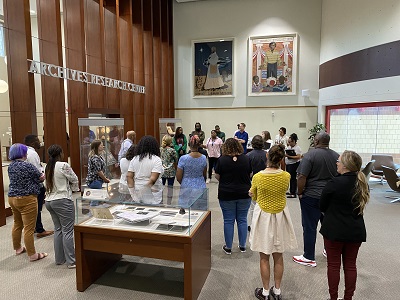
Even sixty years after the U.S. Civil Rights movement, the nation continues to grapple with urgent social justice challenges. The pandemic and the summer of racial reckoning in 2020 have intensified discussions about racial justice that are occurring against a backdrop of rising economic inequality and political polarization. As a result, it is necessary that the educational resources and methods used for teaching today’s students about civil rights are rooted in both equity and empathy.
As a result, the National Center for Civil and Human Right’s K-12 education program is at the heart of its work. Since opening its doors in 2014, The Center has delivered impact on its mission to inspire the changemaker in each of us as a museum, human rights organization, and cultural institution. They are proud to be part of the fabric of downtown Atlanta as a destination for visitors to reflect, to be inspired, and to be transformed. The Center has set an ambitious goal that by 2028, they will be the top place students and educators turn to for learning and understanding U.S. Civil Rights history.
One of the primary ways The Center is seeking to achieve this goal is through a newly developed Civil Rights Teacher Fellowship. The Fellowship seeks to build up a leadership corps of civil rights educators across the state of Georgia ensuring The Center’s resources align with the needs of educators and the communities where they teach. The annual fellowship convenes a cohort of 25 K-12 educators from across Georgia for a one-year experience in which they are immersed in The Center’s curriculum and then supported to elevate their practice through coaching as they integrate what they have learned into their teaching. Participants spend one week in person during the summer at The Center in Atlanta experiencing the exhibits, getting trained on curricula and hearing from civil rights scholars. In addition to the content, fellows learn pedagogical techniques for teaching concepts that might be divisive. Over the course of the school year, The Center will convene the fellows in smaller subgroups on a monthly basis to provide guidance as they test out content in their classrooms.
Funding from the Dobbs Foundation helped launch the inaugural cohort of civil rights teaching fellows in 2023. The Center will make the fellowship a permanent part of their education arm and evaluate options for extending the reach of the training offered through a “train the trainer” model whereby educators who complete the fellowship have an opportunity to share their learning with other educators in their school communities.
Grant amount: $100,000 for inaugural pilot year of the program
Recent Grantees
According to recent data from Atlanta Public Schools (APS), of the 226 pre-K and Kindergarten teachers in APS, only 1 is a Black man while Black children make up 74% of pre-K students and Black boys account for 39% of pre-K students. However, a 2017 study by Johns Hopkins University found that Black children from low-income families who have a Black teacher in the early grades are more likely to graduate from high school. To increase representation of Black male educators in early learning environments, The Literacy Lab, a national nonprofit organization, started the Leading Men Fellowship. The Leading Men Fellowship program aims to empower and equip young men of color, ages 18-24, with opportunities to pursue a long-term career in the field of education by serving as a preschool literacy tutor for an entire school year. After a successful efficacy study of the program in Washington, DC, the fellowship expanded to Metro Atlanta with the help of the GreenLight Fund. Dobbs funding helped launch the inaugural year of the fellowship in the region (2022-2023) which placed 20 trained fellows in pre-K classrooms in APS and Sheltering Arms.
Grant Amount: $50,000
Learn4Life’s (L4L) mission is to engage education, business, and community partners, along with families and students, in a regional cradle to career collective impact initiative; to lift up and amplify what is working; and to collect and analyze data to ensure continuous improvement of Bright Spot strategies. In Georgia, more than 60% of teachers report that burnout/overwhelm is a top reason they want to leave the classroom. In response, L4L partnered with five metro school districts to pilot an effort focused on teacher retention through the lens of improving school leader social-emotional competencies, teacher wellness, and school culture. In collaboration with the Georgia Leadership Institute for School Improvement (GLISI), L4L launched the Restore Teacher Aspiration & Innovation (RETAIN) cohort for school leaders who wanted to decrease teacher turnover in their schools. The cohort served 24 school leaders across nine middle schools to build leader social-emotional competencies, nurture collegial social support, and create understanding between district leaders and school leaders. The cohort included in person and virtual workshops as well as individual coaching sessions. The average school rate of attrition across RETAIN schools improved by 55%, with 37 fewer teachers leaving voluntarily or for early retirement in SY24 than SY23. Participants reported implementing practices including empathy interviews, active listening, wellness and self-care practices, and self-awareness, and improvements in their school cultures including: increased teacher volunteerism for school-wide initiatives, teacher confidence and willingness to take risks, teacher expression of hope, and honest feedback from teachers to leaders.
Grant Amount: $25,000
Many Georgians are familiar with Georgia Public Broadcasting (GPB) as a public media outlet for television and radio. However, GPB also has an educational arm that provides digital learning content and technical assistance for classrooms across the state for all subjects and grade levels. GPB’s natural science courses are especially high quality and popular amongst the education community. Recently, due to the rise in digital learning and GPB’s efficacy, Georgia’s science teachers have asked GPB to produce Environmental Science content which has not existed previously. The Dobbs Foundation is underwriting the production of a first-ever Environmental Science digital learning series and accompanying materials for Georgia’s teachers to use in grades preK-12. The series will be comprised of six episodes that address the state’s Environmental Science standards as well as content about careers in the field.
Grant Amount: $100,000
Environment
By strategically investing in strong leadership and leveraging effective collaboration and partnerships, we can cultivate a culture of conservation that promotes responsible stewardship of natural resources and fosters sustainable solutions to environmental challenges in Georgia. With a commitment to equity, the Foundation supports approaches that ensure all communities have a voice in and benefit from protecting important natural areas such as the Georgia coast, North Georgia landscapes, and longleaf pine forests.
Featured Project
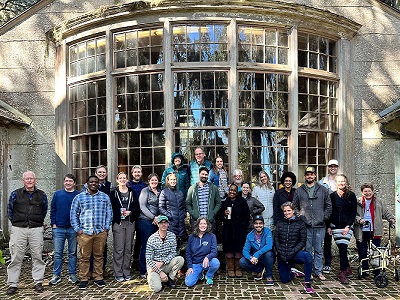
The Georgia Water Coalition (GWC) is an alliance of >260 organizations founded in 2002 to bring together concerned citizens and groups from around the state driven by the belief that water is a finite resource and smart water management is key to achieving sustainable growth. The coalition is committed to ensuring water is managed fairly for all Georgians and protected for future generations. Members work collaboratively on initiatives aimed at ensuring surface and ground waters continue to be public resources, managed in the public interest. The organization is governed by a 15member leadership team made up of the state’s leading environmental organizations such as the Southern Environmental Law Center, seven Riverkeepers, The Garden Club of Georgia, and the Georgia Wildlife Federation.
GWC achieves its mission through prioritizing legislative action and administrative rulemaking in pursuit of strong, equitable water policies. GWC typically addresses 2-3 proactive priorities each year as well as continuously mobilizes advocacy to fight attempts to roll back or weaken existing protections. Notably, GWC also publishes signature and widely-read annual reports that highlight water conservation champions (The Clean 13) and those who cause harm (The Dirty Dozen). The coalition has a strong track record of building and maintaining relationships with policy makers at all levels and have found success appealing to elected officials across political spectrum through a philosophy that economic development and conservation can exist side by side. Some past examples of policy victories led by GWC include the passage of the Trust Fund Honesty Amendment, reinstating coastal marsh buffers, passage of an Emergency Response Bill, and blocking multiple attempts to privatize Georgia’s water resources.
GWC’s current programmatic priorities include the Okefenokee Protection Act and Regulating Soil Amendments. In addition to priority water policy work, the GWC heads up a Hazardous Waste Site GIS mapping project and environmental justice scoring tool. This effort will help rank and prioritize impacted communities adjacent to hazardous waste sites and assist them with bringing in dedicated trust funds to clean up the toxic legacy pollution in their watersheds. Funding from the Dobbs Foundation supported GWC’s operations and strategic priorities, namely increasing member capacity and retention, effectiveness of advocacy, and capacity with fundraising, staffing and communications to remain a highly effective force for water conservation in Georgia.
Grant Amount: $75,000
Recent Grantees
The Orianne Society is dedicated to the conservation of reptiles, amphibians, and the ecosystems they inhabit. The Orianne Society has played a leading role in supporting Georgia’s longleaf pine ecosystem and the Gopher Tortoise Conservation Initiative through: applying over 40,000 acres of prescribed fire; planting over 450,000 longleaf pine seedlings; restoring 72 acres of native ground cover; and implementing four native ground cover donor sites for harvesting seed for future restoration work. The Orianne Society owns 2,500 acres of land which houses their Longleaf Stewardship Center (LSC). The LSC is transitioning into a collaborative hub, demonstration site, and training center that brings together staff, volunteers, and partners to learn about and implement Gopher Tortoise and habitat conservation. As a part of this transition and increased demand, The Orianne Society saw the need to expand capacity. Dobbs Foundation funding supported the purchase of equipment needs for a new fire team including vehicles which will be used for prescribed fire, ground cover restoration, species inventory work, and monitoring.
Grant Amount: $110,000
Manomet is a science-driven conservation organization founded more than 50 years ago as a bird banding lab. Today, they have teams in North and South America focused on improving the health of flyways and ecosystems at the international, regional, and local scales. Their goal is to reverse the decline of shorebirds, promote coastal resilience, and educate and empower the next generation of conservationists. Manomet is skilled at forming vital partnerships with businesses, producers, and educators to help nature and local communities thrive. In 2017, Georgia’s coast was designated as a “Landscape of Hemispheric Importance” by the Western Hemispheric Shorebird Reserve Network. The coast provides vital habitats for the federally threatened Red Knot and Piping Plover and is used by about 300,000 shorebirds throughout each year. Manomet has established highly collaborative and effective work on the Georgia and South Carolina coasts to combat major threats such as climate change, human population growth, and incompatible coastal management practices. Manomet’s coastal work involves two signature programs: 1. The Georgia Bight Conservation Initiative, a collaborative effort to improve at least 1,000 acres of critical shorebird habitat along the barrier coasts and 2. The Coastal Zone Initiative, a regional engagement with the US Army Corps of Engineers and state authorities, designed to promote coastal engineering best practices that increase resilience for wildlife and human communities. Dobbs support will help match federal funding that will continue to underwrite both programs.
Grant amount: $275,000 payable over three years
Since the 1960s, The Nature Conservancy in Georgia (TNC) has used a science-based approach to improve the health of GA's ecosystems. TNC has protected over 400,000 acres in the state from the mountains to the coastal barrier islands through a model of collaboration. A new initiative of TNC is the Georgia Integrated Oyster Resiliency Initiative which seeks to bolster the coastal economy, environment, and cultural heritage of Georgia. Oyster reefs help protect shorelines from erosion by serving as natural buffers against rising tides and storms while providing habitat for fish, crab, shrimp, and other commercial and recreational fish species. As filter feeders, oysters provide ecosystem services by improving water quality. Despite many benefits, oyster habitats are imperiled (over 85% of oyster reefs have disappeared) and oyster shells, the foundation for growing reefs, are often thrown away by restaurants. Through this inclusive stakeholder initiative, TNC is collaborating with partners on an integrated oyster management plan that connects citizens, fishers, public agencies, local governments, nonprofit organizations, and other stakeholders to an active inclusive planning process for coastal resiliency in Georgia. The plan includes a shared vision; strategies and actions for oyster restoration and protection, wild and aquaculture fisheries, living shorelines, shell recycling, education and marketing, work force development and legacy transfer through youth and elder participation.
Grant Amount: $100,000 payable over two years.
Health
By strategically investing in efforts that promote resiliency and mental well-being among Georgia’s youth, we can address stigma and trauma, strengthen prevention and early intervention strategies, and expand access to needed mental health care and supports. The Foundation will prioritize initiatives that strengthen relevant systems and policy, provide care in schools and communities, and grow and sustain the mental health workforce.
Featured Project
Established in 2019, Hopebound’s mission is revolutionize access to mental health care for young people from historically marginalized communities. Hopebound utilizes emerging master’s and doctoral level pre-licensed clinicians (under professional supervision) as mental health care providers for middle and high school students at no or low-cost. Hopebound provides their behavioral health interventions through individual tele-therapy as well as in-person and virtual group therapy.
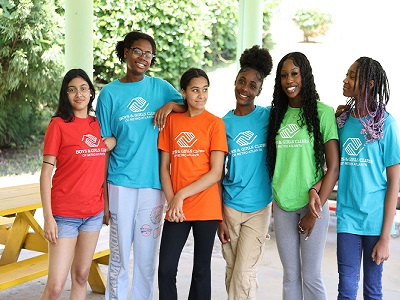
Boys & Girls Clubs of Metro Atlanta (BGCMA)’s mission is to ignite the unlimited potential of kids and teens by creating safe, inclusive, and engaging environments. BCGMA has supported youth (ages 6-18) across Metro Atlanta for over eight decades through out-of-school time programming and currently serves ~7,000 youth annually at 25 clubs in 10 counties.
In 2021, to respond to the youth mental health crisis, Hopebound and BGCMA teamed up and piloted the delivery of virtual and in-person psycho-education and mental health support for youth enrolled in BGCMA. The rationale (and demonstrated results) included rendering mental health support more accessible in places where trust is already high using a modality that helps destigmatize mental health care. BCGMA members reported feeling unsure of attending 1:1 counseling sessions and felt groups were more approachable because of the impact of hearing peers share similar challenges. Additionally, their parents and caregivers were more open to having their children participate in groups compared to individual counseling. Overall, the program proved effective in removing barriers to accessing mental health services in a critical time for low-income youth in need.
During the pilot, two Hopebound clinicians led virtual groups for approximately 12 students at the A. Worley Boys & Girls Club in Gwinnett County for one hour each week for 10 weeks. Topics included self-esteem, navigating peer relationships, setting healthy boundaries, and creating a sense of balance between school and personal life. In 2022, Hopebound also provided 10 weeks of in-person groups for 7th-12th graders at an additional site in Gwinnett County: the Lawrenceville Boys & Girls Club.
The partnership at these two Clubs proved effective for improving students’ well-being and funding from the Dobbs Foundation helped Hopebound to expand to four additional sites. In total, they will serve six Club sites in 2023-2024 and reach 180 middle and high school youth in Gwinnett, Rockdale and Dekalb counties.
Grant Amount: $46,000
Recent Grantees
The Vashti Center has served Decatur County for over 100 years, providing behavioral health care to children and families. Its services include therapy, psychiatric evaluations, trauma assessments, and substance use education, both in schools and homes. Led by Executive Director David Sofferin, whose expertise bridges community practice and state-level policy. Vashti is a trusted provider with deep local relationships and a track record of impact in Thomasville and Decatur County, GA.
Grant amount: $50,000
MHFC was launched in 2016 and has grown into a collaborative of over 40 philanthropic partners, including family, corporate, and national foundations. The fund has raised $1.76M and granted over $1.3M to support youth mental health initiatives across Georgia. It works closely with trusted nonprofit and public sector partners, produces actionable research such as the 2024 Strengthening Youth Mental Health report, and prioritizes community voice, equity, and long-term reform, especially within Medicaid-supported systems. Dobbs funding will go towards supporting a portion of the Youth Mental Health Fund, specifically the Youth Wellbeing Innovation Awards. These awards provide small grants to grassroots organizations doing high-impact work. This approach reduces administrative burden by removing the need for separate due diligence on each small grant while aligning our support with broader system-level strategies.
Grant amount: $50,000 payable over two years.
In 2017, filmmaker Tamlin Hall produced his first feature film, “Holden On,” a true story about his childhood friend who died by suicide at age 19. After the film’s impact, Tamlin was inspired to form Hope Givers to create educational content about youth mental health and disseminate it across Georgia. Since then, Hope Givers partnered with Georgia Public Broadcasting and the Georgia Department of Education to produce a youth mental wellness series highlighting hope and resilience aligned to Georgia state health education standards. This first season was made available to all Georgia middle and high school classrooms free of charge and won a Southeast EMMY Award. The second season has recently been nominated for three EMMYs. A 2022 survey found that 77% of students reported that the series could save young lives. In addition to content, Hope Givers produces live school events about mental health that have been performed in front of nearly 10,000 students throughout the state. Hope Givers also coordinates an annual student film competition and a teen-led conversation series. Dobbs Foundation funding provided support for strategic consulting and capacity building to help Hope Givers plan for Season 2 of its series and its future as an organization.
Grant amount: $150,000 payable over two years